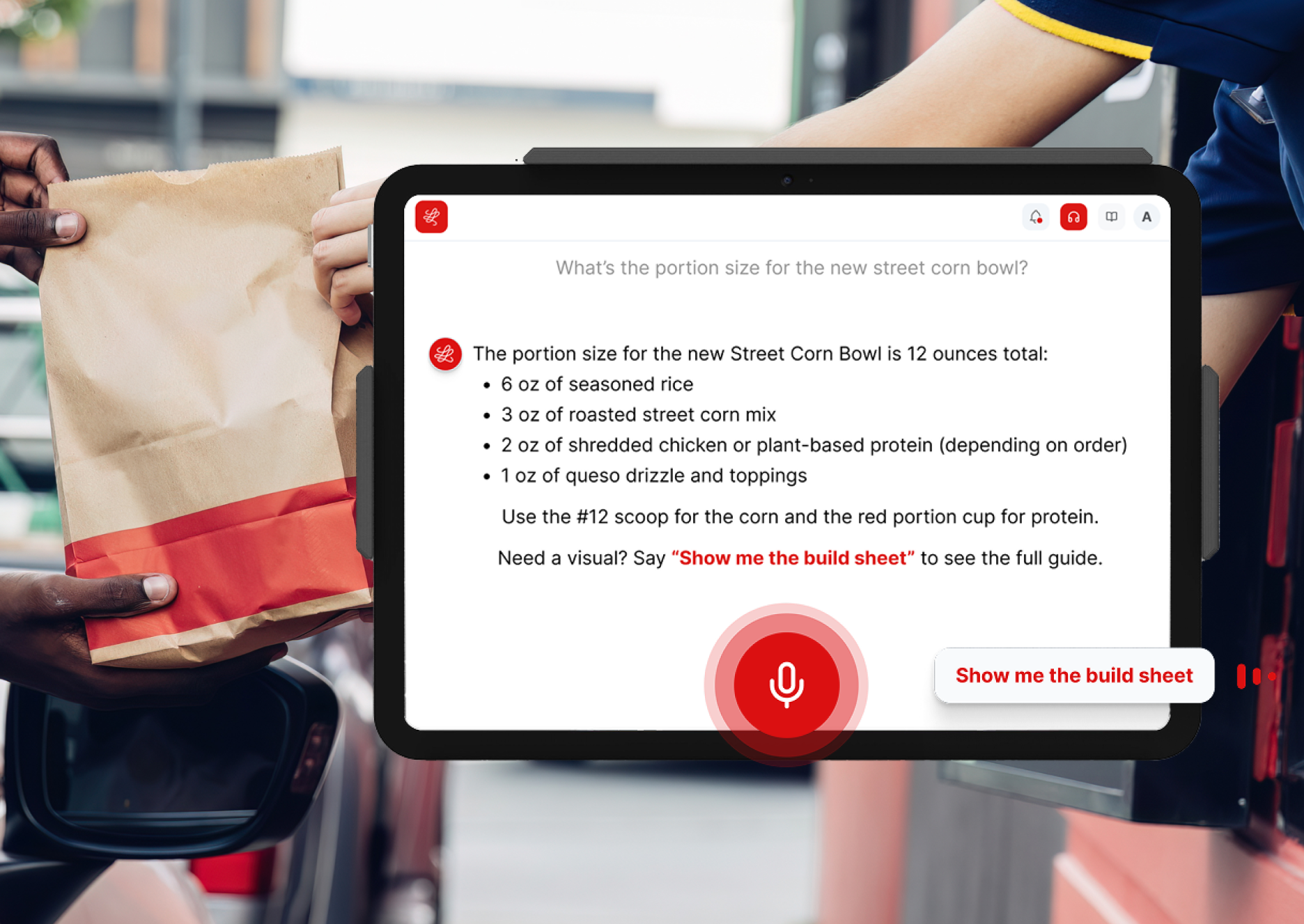
Industrial environments generate large volumes of data across systems of record, production logs, and operational records. While this data is abundant, it is fragmented, difficult to interpret, and often underutilized in day-to-day decision-making. Data Mentor enables users to explore and reason over complex data through conversational and query-driven interfaces, similar to consumer discovery experiences.
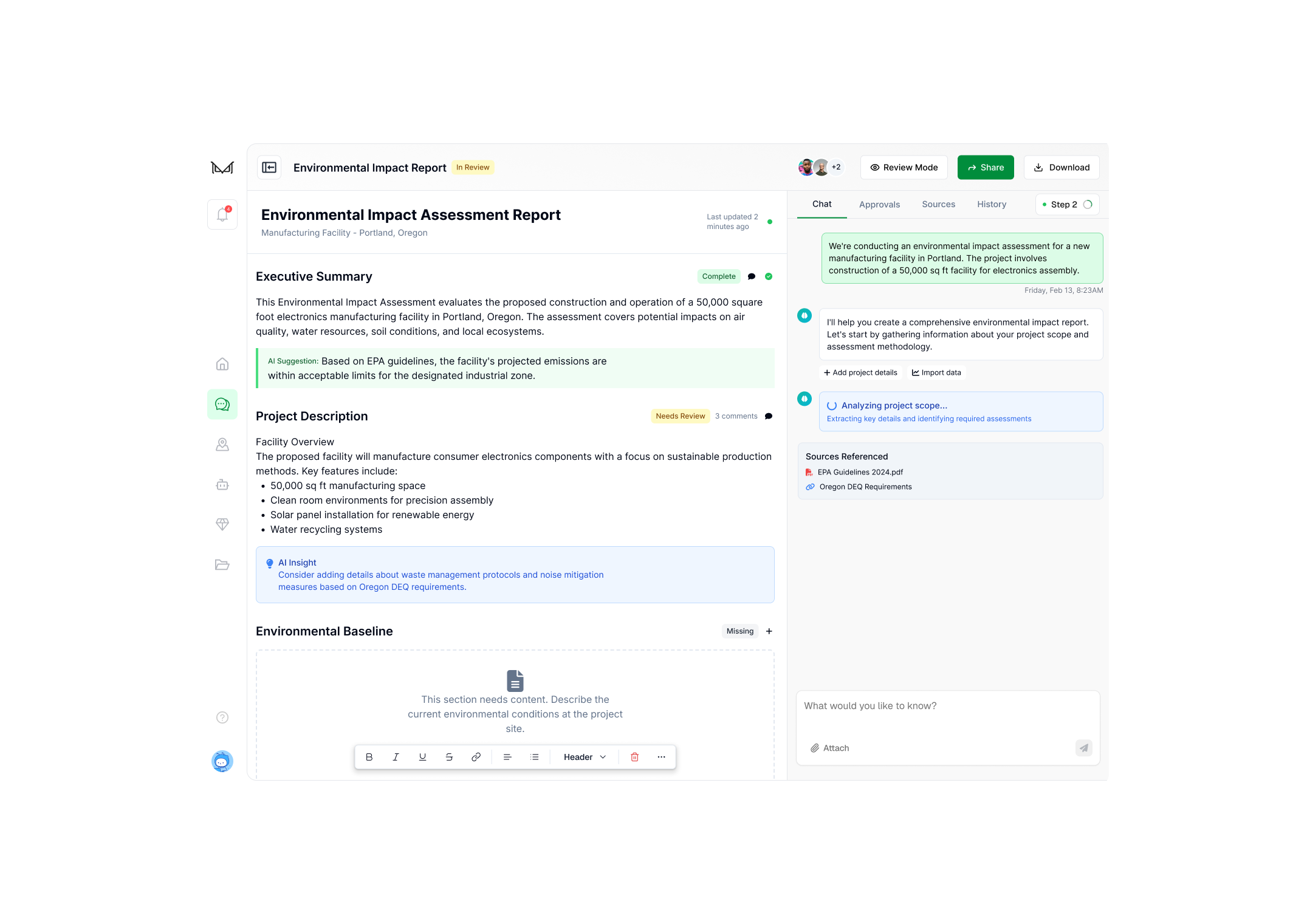
Designing Data Mentor required aligning data architecture, AI systems, and user workflows into a unified decision-support platform.
The challenge was not simply surfacing information, but enabling users to reason over complex, multi-source data in a way that was both intuitive and trustworthy.
I defined a unified data model that integrates:
To support reasoning across these sources, we introduced a knowledge graph layer that captures relationships between assets, processes, and outcomes, enabling more contextual and explainable insights.
I designed retrieval pipelines that combine:
These systems allowed the platform to generate responses that were not only relevant, but grounded in both current system state and historical patterns.
To operationalize insights, I led the development of domain-specific AI agents that:
Each agent operates within scoped contexts, with controlled access to tools and data to ensure reliability and governance.
Given the regulated nature of the domain, we implemented:
This ensured that outputs could be trusted in operational and compliance-sensitive environments.
To support multiple use cases and industries, I helped define reusable platform primitives, including:
This enabled rapid deployment across different domains without rebuilding core infrastructure.
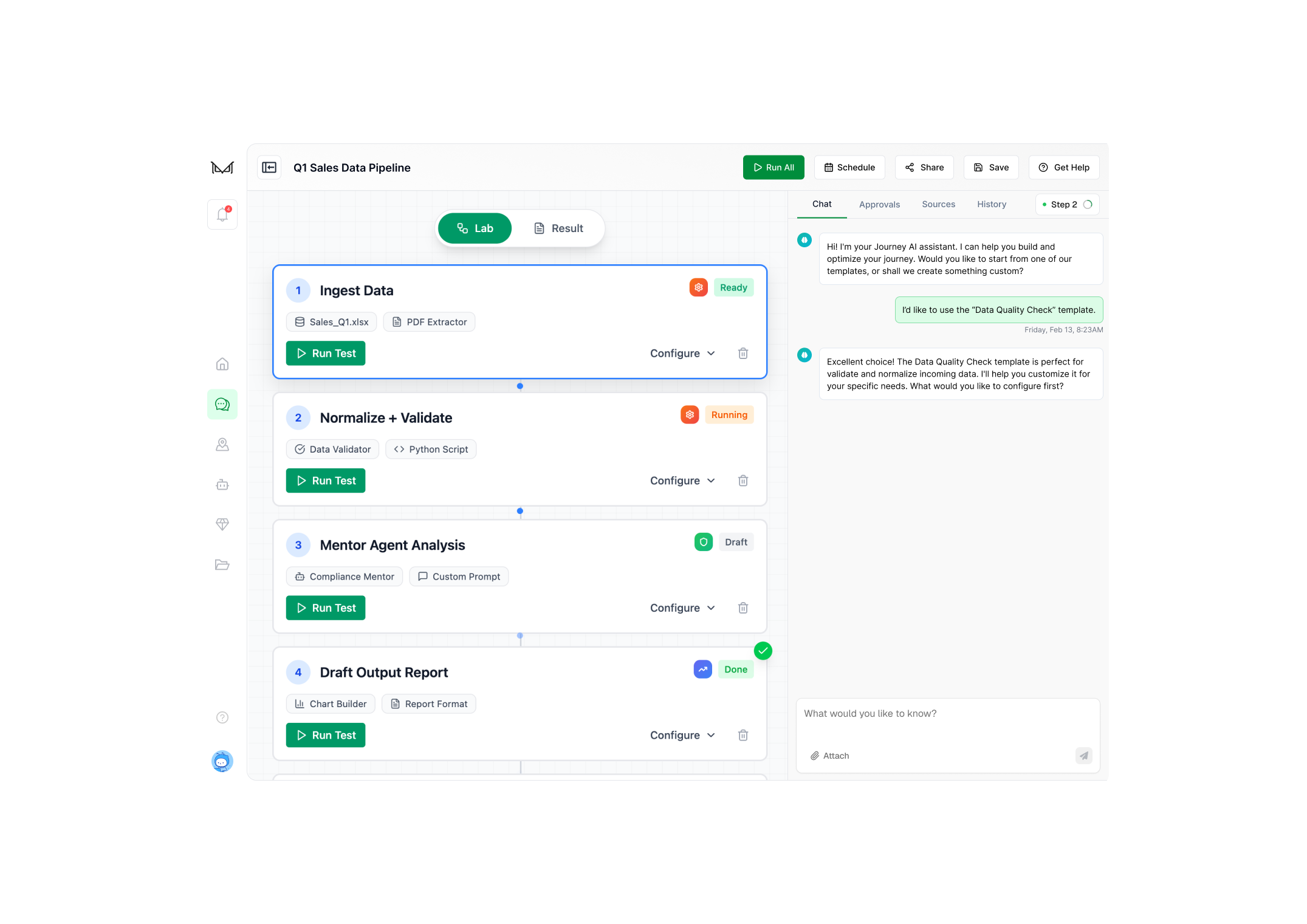
Data Mentor enabled organizations to move from reactive data analysis to proactive, AI-assisted decision-making.
By unifying data, modeling relationships, and delivering insights through a conversational interface, the platform significantly reduced the effort required to understand and act on complex system behavior.